Main TrueNAS Scale Server
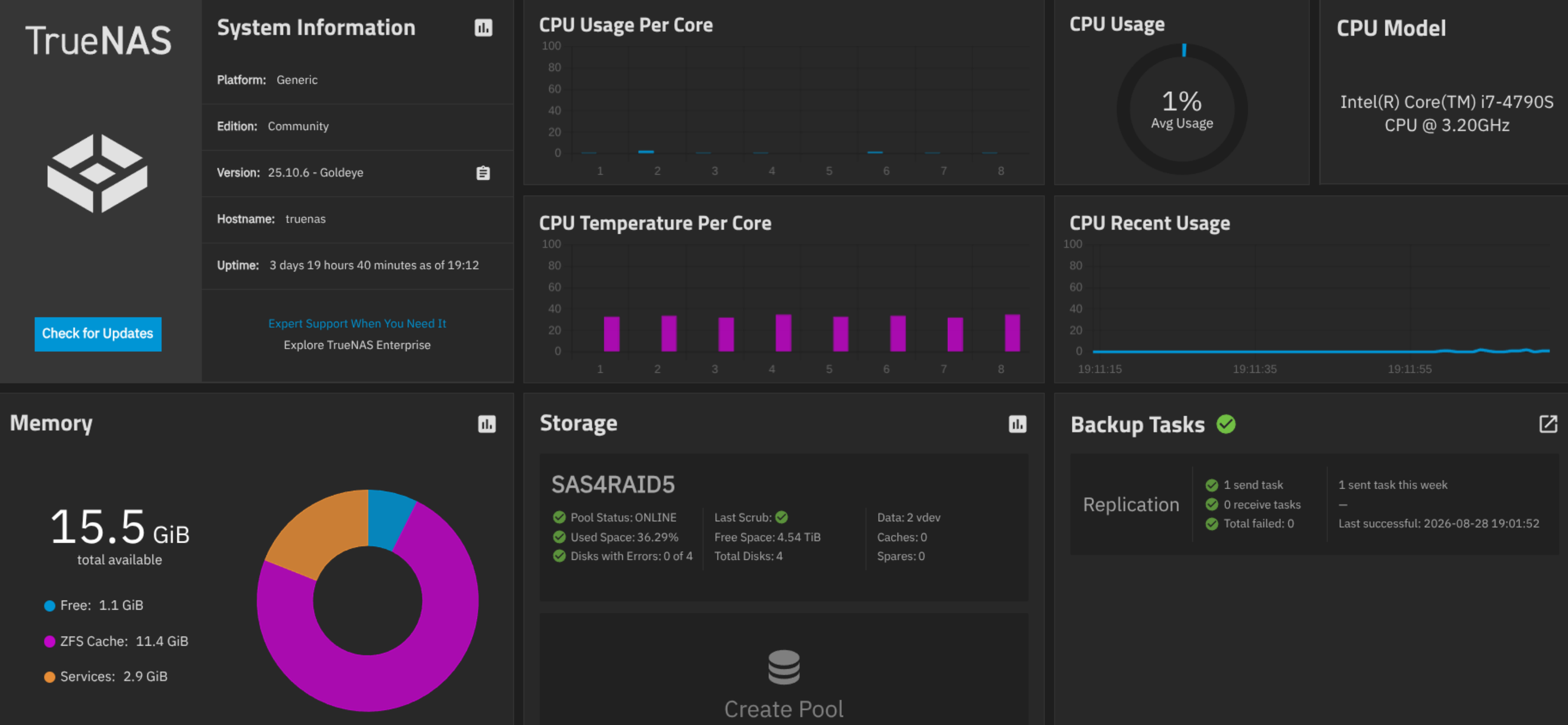
This is my main storage server that keeps all my data safe. It is running on a standard 4-core Intel CPU with 16 GB of RAM, has its boot pool mirrored for redundancy in case one of the SSDs goes bad, and has four 4 TB SAS hard drives connected in a striped mirror RAID configuration to give me fast read and write speeds with enough redundancy to allow one drive to fail safely without any data loss.
It runs a few apps:
-
Uptime Kuma
- Tracks all of my applications' uptimes and sends me a text if anything goes down.
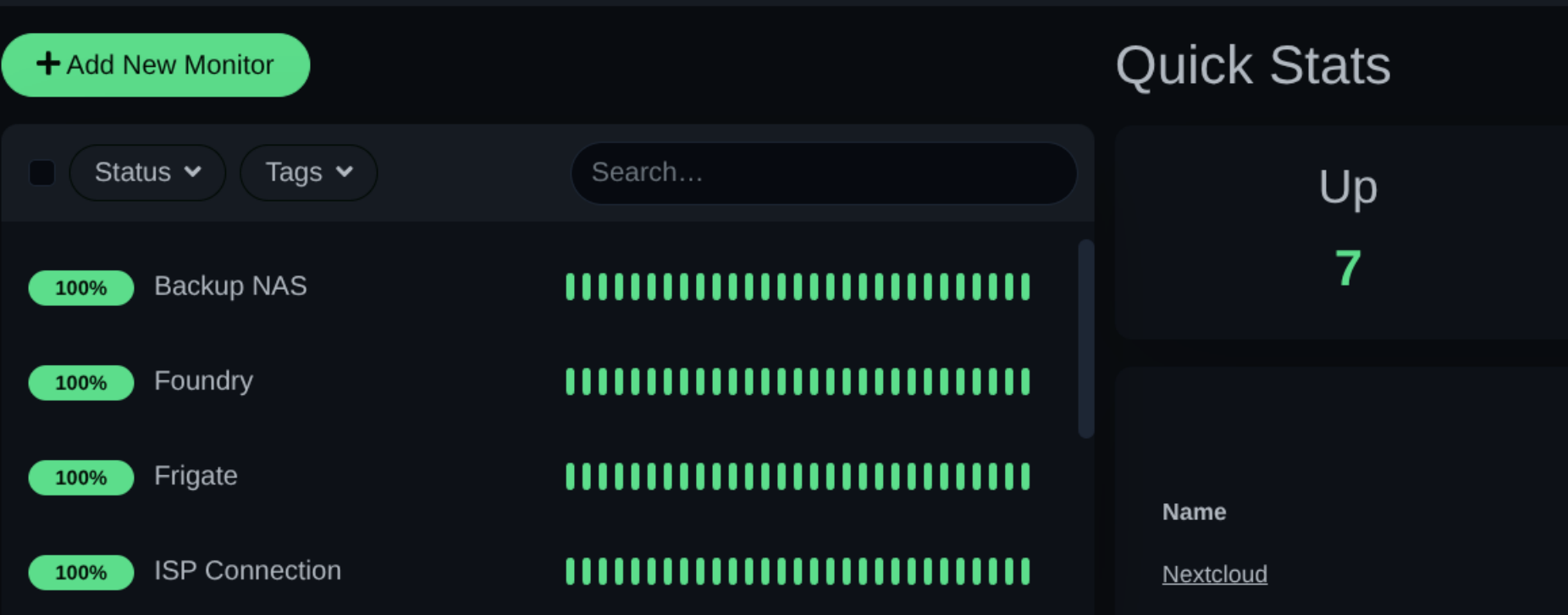
- Tracks all of my applications' uptimes and sends me a text if anything goes down.
-
Scrutiny
- Better monitors the status and health of my hard drives.
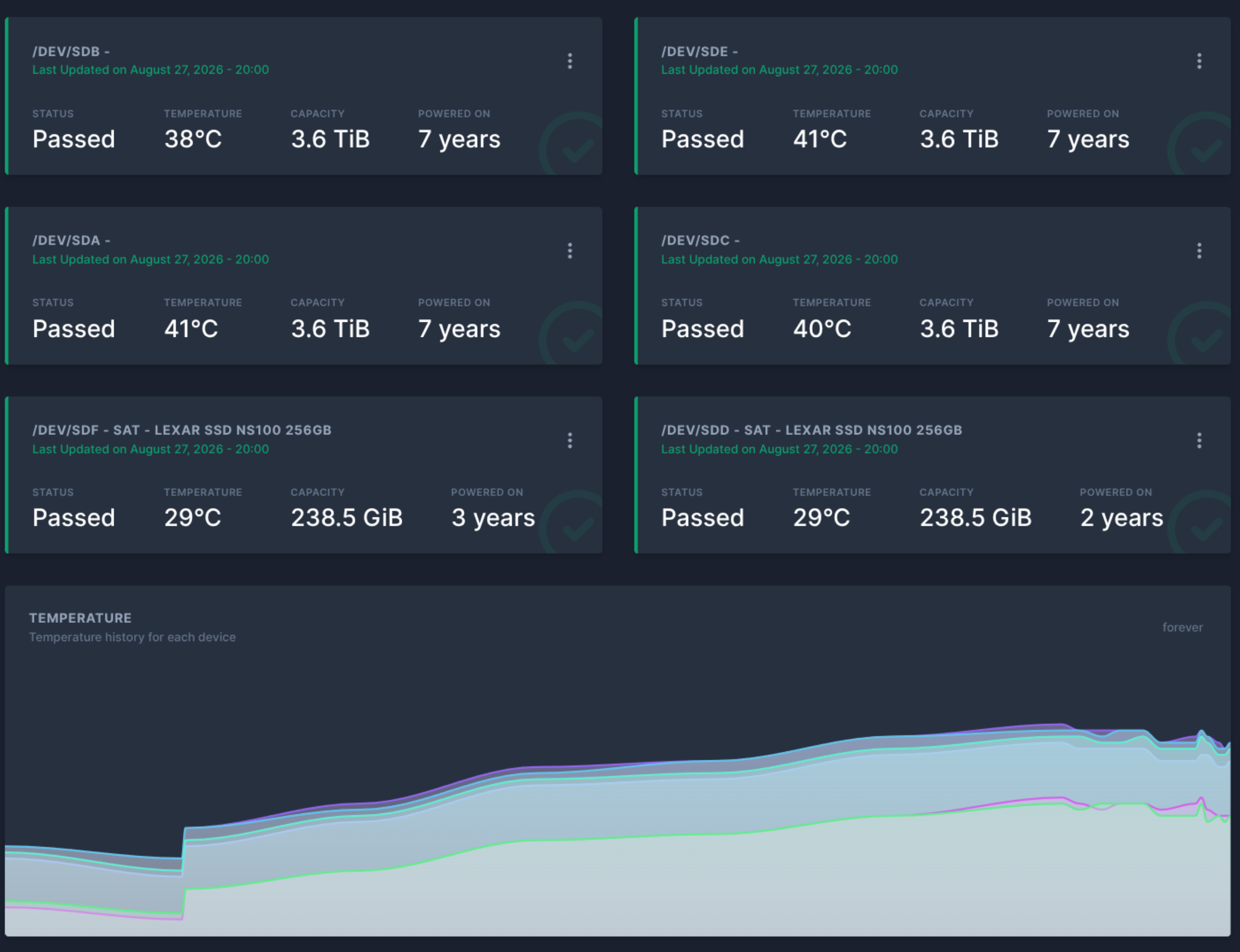
- Better monitors the status and health of my hard drives.
-
Tailscale
- A VPN application that allows me to safely access my internal servers while outside of my house.
The most important thing it does, though, is host network shares to allow all of my other applications to have access to a large amount of secure and redundant storage.
I also have snapshot tasks that run every hour, meaning that if I ever make a catastrophic error, I can always roll back my data to before the error happened. These snapshots are also replicated to my offsite TrueNAS server, so in the case of a catastrophic event that results in total loss of my main server, I will only ever lose at most 1 hour worth of data.
Backup TrueNAS Scale Server
This is my offsite backup storage server that makes sure that my data is still safe in case my main server dies. It is running on a standard 4-core Intel CPU with 32 GB of RAM and has four 4 TB SAS hard drives connected in a double-parity RAID configuration with enough redundancy to allow for up to 2 drives to simultaneously fail safely without any data loss. The read and write speeds are slower in this configuration, but this server is built specifically for high redundancy, not speed.
This server does not do much other than receive replication backups from the main server over a secure VPN tunnel.
Proxmox VE Server
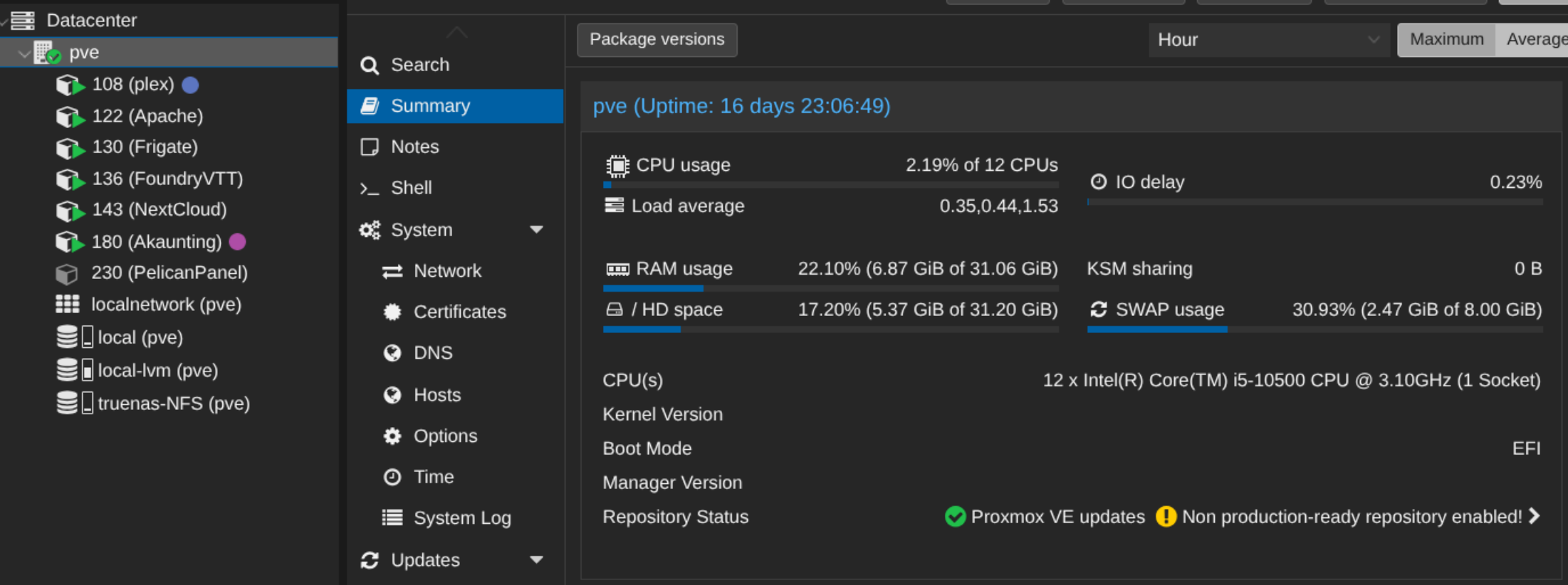
After the RAM in my cluster computer started to go bad, I decided to retire the three sub-motherboards and move my Proxmox VE server to another, less power-hungry machine.
This server hosts all of my virtual machines, allowing me to run 8 servers on one machine. It is running on a 6-core Intel CPU with 32 GB of RAM and a single 128 GB NVMe drive, which is used to boot and to store virtual machine disks.
The Proxmox host itself connects to TrueNAS to store its daily virtual machine backups. It runs quite a few servers, of which I will mention the most important:
Plex
This is how I host all of my personal video files. When I take clips in video games and such, I can upload them here to have a nice dashboard for viewing them and showing others.
Apache
This is my main web routing application. All web traffic is directed through here, allowing me to host many sites on my network. It is also hosting the website files for my personal websites, including the one you are reading this on!
Frigate
This server monitors the stream of video footage that my personal security cameras feed it. It takes in the footage, analyzes and detects things like people or pets within the footage, and stores the footage for a few days.
Foundry VTT
This is a server I run to play online D&D with some of my friends. It's one of the best pieces of software for online D&D hosting, and I prefer to host it myself.
Nextcloud
This is a jack-of-all-trades kind of server. It does many things, including:
- Automatically backing up photos I take on my phone to my server
- Texting/messaging application so I can keep in touch with friends without using someone else's app
- Keeping track of budgeting
- Easy file sharing via a link people can download files from
- An online Office suite
Akaunting
This server keeps track of my financials for my business. I use it to keep track of expenses, income, and everything else that I will want to have on hand come tax season.